Showing posts with label agvocacy. Show all posts

Friday, March 11, 2016

Marketing is a first-world issue. Let's change that.

The plethora of my college experience was in marketing and communications. Just a few years ago, I was in love with strategizing and developing campaigns to drive markets, meet consumer demand and ultimately, make more sales and impact the economy.

Now, I despise it.


Our world has become one of extraordinary misinformation. Superficial needs raise above those of fact. It is a first world issue.

You may disagree. However, as I analyze what I grew up with and what I desire now, the two do not align.

In rural northwest Ohio, I did not grow up with much. I did not need to. Growing up, my family was content on our little row crop and livestock farm. My mom, dad, sister and I stuck to our agricultural roots and spent a majority of our time in the great outdoors, working during the day (or after school was out) and coming back inside for dinner together in the evenings. At some point during my youth, that all changed. I cannot pinpoint the exact year, societal pressures or cultural shift. However, the shift has accelerated tremendously to now.

It is saddening to see how much disconnect stands between families, friends, communities and the world. You might disagree. You might think social media has made us more "social" and more "connected" than ever. I beg to differ.

Caroline's Cues | Perspective in marketing


The quote "perception is reality" is the unfortunate view of today's world. For example, the above photo I captured while in New Zealand in 2013. Fun farm fact (on Friday), there are more total sheep in New Zealand than people!


Is the sheep helpless or being helped? 


Caroline's Cues | Sheep Shearing in Agrondome, NZ
Sheep is propped on her haunches in preparation for shearing. 

Caroline's Cues | Sheep Shearing in Agrondome, NZ
The farmer began by shearing her belly, and proceeded to shear the rest of her
wool to be cleaned and made into clothing goods.

Caroline's Cues | Sheep Shearing in Agrondome, NZ
This shearing not only lifted some weight off the sheep's body, but allows
her to grow new, healthy hair -- just like when we get hair cuts!

If you did not have these additional photos of the sheep, would you have been inclined to think she was helpless?

Saturday, December 19, 2015

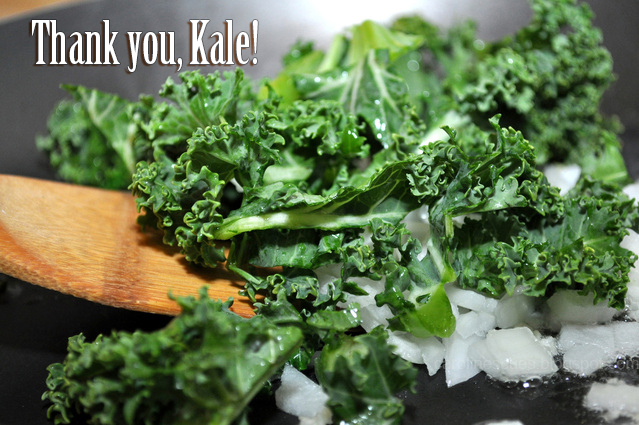
Thank you, Kale!

Mmmmm, kale. A healthy, fibrous green vegetable acclaimed by the health world as a "super food" and staple addition to a healthy diet. People in the health and food industry are always urging more people to eat veggies, "natural" products, that our bodies digest better and can be converted into healthy fuel for the body.

I agree completely. Eating more vegetables has helped me maintain and perform to levels I did not expect possible. Guess I should start eating more of this GMO.

Thank you, Kale

Yes, GMO. Kale is a GMO. Genetically modified organism. And it's a damn good one. A few more of its vegetable relatives are too.


Kale, broccoli, brussel sprouts and cauliflower are just a few examples of vegetables that are genetically engineered for certain qualities we want. Many foods in nature today are not what they looked like many years ago. That's adaptation. Some of them, like the sweet potato, are naturally derived GMOs. Nonetheless, they are still good for you.

The term GMO gets a bad rep. Instead, first world people are obsessed with the terms like "organic, natural, gluten free", when those products may not have any other option to begin with. In today's age of technology, scientists and food production companies know the growing need for food diversity, instant meals, and more options to feed our extremely picky or extremely adventurous taste buds.

Monday, September 1, 2014

The error of eavesdropping -- They were talking about food production

Last night in Fort Wayne, I decided that since my cable plan won't allow me to watch the NASCAR race, I would find a local sports bar to enjoy it. Lucky for me, a Buffalo Wild Wings is two miles down the road from my apartment.


As I sit at the bar, enjoying my Octoberfest and boneless wings and watching the first 25 laps of the race, I overhear a conversation happening three stools down from me. OK, I may have been sitting by myself at B Dubs, so naturally, I listen to people talking around me. But, what perked my ears wasn't necessarily a pleasant conversation.

Friday, June 13, 2014

How can we "meat the myths"?

Meat MythsToday is the information age. For the agriculture industry, this is part of a 'moo'vement. Consumers want to know how their food is grown, what is added or used in the process from pasture to plate and what makes the food healthy or produced 'safely' in their eyes.

Along with this factual information, we commonly interact with more 'entertaining' information on the Internet. Buzzfeed is a website for this entertainment purpose. Have you taken a quiz during your lunch break to see "which state you should live in" or "which Ryan Gosling movie character should you marry?" I'll admit, I have! It's fun and gives you a brief reprieve from another task you may have been doing. The past few days, some of my Facebook friends were sharing a different type of post from Buzzfeed instead of the usual quiz.

At the Community on Buzzfeed page, the American Meat Institute shared "15 Common Meat Myths That Need to Be Crushed For Good." I highly encourage you to read through them. Growing up in ag myself and with livestock no less, there were a few on the list I was not familiar with. However, it was once I scrolled down to the comments section of the page that my interest peaked.

There were some readers who were pleased with the information shared. Many were from a farming background, but some were not. There were also critics who felt American Meat Institute was just 'tooting their own horns of the corporate world' and 'feeding consumers false information'. Yes, it explicitly says that the post was created by the user and not the Buzzfeed editors. However, why are readers taking this stance as inaccuracy?
Newborn Shorthorn cow and calf
Shorthorn cow and newborn calf on Weihl Farms.

How can we bridge that gap of concern and sometimes inaccurate thoughts? We can't sway the 20 percent of society who have already focused against the industry. But the 60 percent in the middle group who remain unsure and can be influenced are who needs our help as the remaining 20 percent for agriculture. We need to join the movement. Society needs not just sources like AMI sharing info, but farmers and growers in local communities to "meat these myths" and share them with the public. Trust is built quickly through personal relationships. Therefore, we need to build trust at farmers markets, grocery stores and on our farms and ranches to overcome the blurred lines of the food industry and mass media.

Just yesterday, I helped birth a calf in the pasture. That heifer will add to the food chain either by being raised for a beef heifer or to be kept for breeding and reproduce herself. Until she reaches that age of maturity at around 6 months, it is up to our family to help her and the cow adjust and grow to be a healthy heifer (young female bovine). It is humbling to be on the farm to witness this process and I understand that not everyone can have this opportunity. But, that makes it my responsibility and that of other agriculturalists to share it for those who can't witness firsthand.

How will you join in this 'moo'vement for agriculture?
What ways are you already participating?